REMIRA, one of Germany’s largest software providers for commerce and supply chain solutions, forecasts significant advancements in omnichannel solutions by 2027: In the coming year, the focus will no longer be solely on the seamless integration of sales channels such as online stores, marketplaces, and brick-and-mortar stores. AI integration will enable new shopping experiences through autonomous background processes. Retailers who embrace AI in omnichannel commerce will benefit from a combination of maximum operational efficiency and unbeatable, real-time customer-centricity. This will mark a shift from connected channels to an intelligent, autonomously operating ecosystem.
By 2027, artificial intelligence (AI) will increasingly become an active component of omnichannel retail. AI agents will transform product searches and purchasing decisions, while intelligent software systems will contribute to more dynamic management of inventory, fulfillment, and product assortments. At the same time, brick-and-mortar retail is evolving into an adaptive shopping environment where personalized advice, retail media, and seamless payment processes intertwine. The foundation for this lies in interconnected data. Although the automation of commerce processes is becoming increasingly widespread, human interaction remains a key factor in the customer experience.
“For a long time, the main focus was on integrating channels, systems, and data. In 2027, what retailers do with this integration will be decisive,”
explains Frank Noß, Vice President of Sales Commerce at REMIRA.
These 10 omnichannel trends will shape the coming year
1. Agentic Commerce
The next step in the evolution of omnichannel commerce is the shift from AI-powered product search to autonomous purchasing decisions. In the future, customers will be able to specify a goal, while the system organizes the path to achieving it. AI agents will increasingly take over aspects of the customer journey. They research products, compare prices and availability, take customer preferences into account, and can already initiate orders or repeat purchases in some cases. This creates a new touchpoint alongside physical stores, online shops, and apps: the interface between the customer and the AI agent. For retailers, this means that commerce systems should no longer be designed primarily for human users. Product data, prices, inventory levels, delivery times, and services must be structured and available in real time so that external AI systems can process them.
2. Generative Search and Conversational Commerce
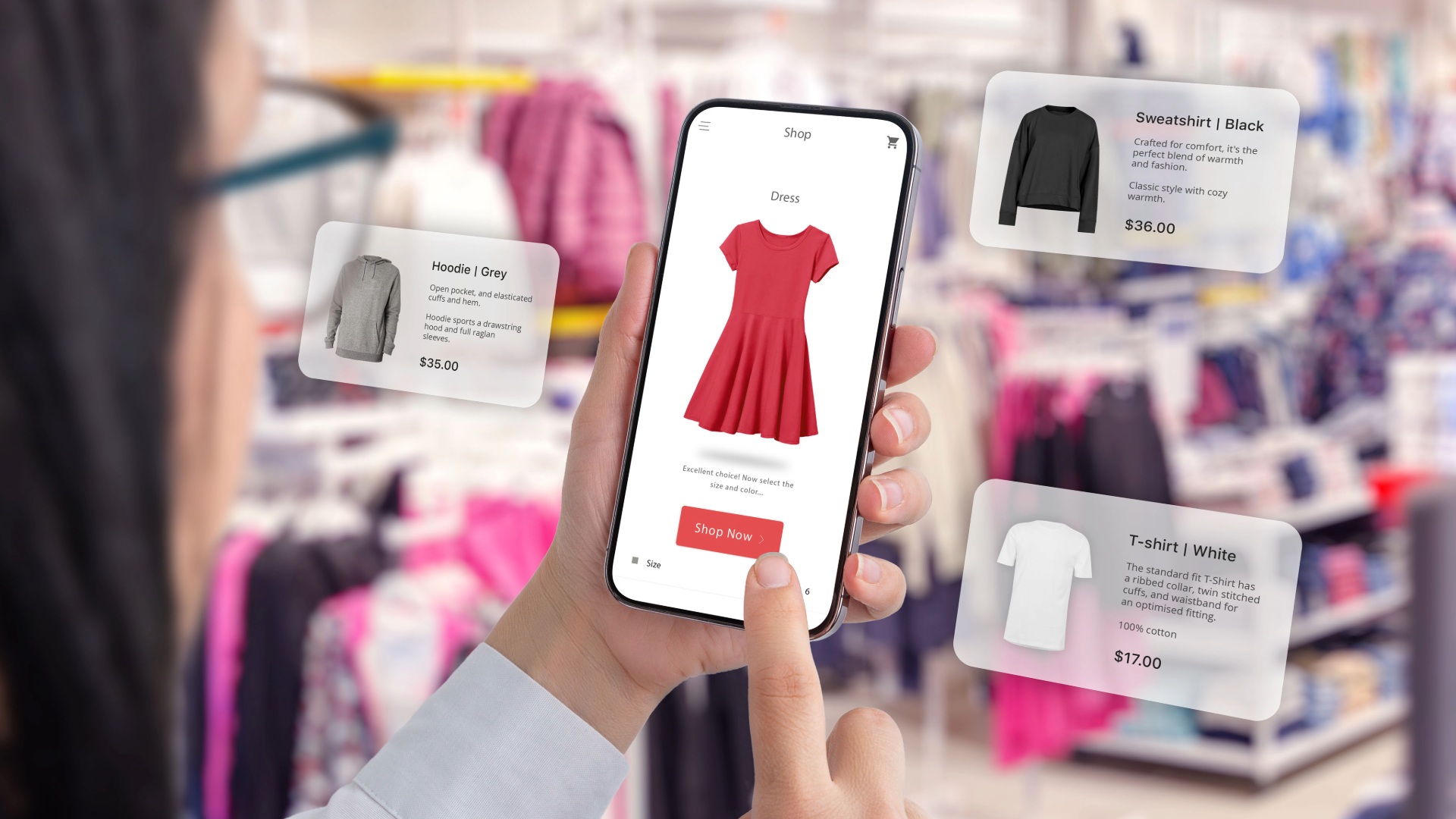
One specific stage of the customer journey that will be dominated by AI in the future is product research. In the future, customers will no longer search using traditional filters and keywords, but rather through dialogue with AI assistants that can semantically search product catalogs and provide context-sensitive advice to customers. This dialogue remains consistent across channels: a consultation session started in the app can be seamlessly continued in a messaging app, via a voice interface, or even at an in-store terminal. This requires well-maintained product and inventory information. This means that retailers who do not format their data to be machine-readable risk losing visibility.
3. AI-Powered Store
AI will also play an increasingly significant role in brick-and-mortar retail. Its purpose is not to replace sales associates, but rather to support them with real-time information on customers, products, and inventory. In this way, conventional retail transforms into a data- and AI-driven interactive space. Clienteling systems, for example, immediately provide relevant customer data, product information, or cross-selling opportunities. At the same time, digital price tags, screens, and mobile touchpoints respond to inventory, demand, or contextual factors in real time. In this way, the store evolves from a static sales floor into a dynamic, adaptive sales system that can more efficiently adapt processes and communication to different situations.
4. “Human Commerce” as a Differentiator
Despite the increasing automation of commerce processes, people remain a vital component of the retail process. This is because human interaction offers significant added value when standardized AI models reach their limits in situations that require advice, empathy, or trust. So while the role of sales staff is changing—as employees transition from transaction processors to orchestrators of the customer experience—staff are by no means losing their importance. Instead, the more retail becomes automated, the more valuable strategically deployed human employees become.
5. “One Inventory” Becomes “One Decision”
In 2026, REMIRA experts focused on whether retailers had a reliable cross-channel inventory. In 2027, this focus shifts: In the future, it will no longer be just a matter of where a product is located, but what should be done with that inventory. AI-powered order and fulfillment systems can simultaneously take into account inventory, demand, delivery times, margins, and shipping costs. This leads to automated decisions regarding which warehouse fulfills an order, which inventory is allocated to which channel, or which order is prioritized. By leveraging a shared database to enable these decisions about the most economically sound next step, the OMS (Order Management System) is evolving from a purely operational system into a decision engine for omnichannel retail.
6. Smart Small-Format Stores and 24/7 Stores
Especially in rural areas and residential neighborhoods, alternatives to traditional brick-and-mortar stores are becoming increasingly important. By 2027, the classic store network will therefore be supplemented by small-format concepts such as mini-markets and digitally controlled pickup stations. In such environments, they offer customers access to a compact product selection, thereby filling supply gaps without the need to open a traditional store. At the same time, they establish an interface between online ordering and brick-and-mortar retail by serving as click-and-collect locations.
7. Retail Experience Media
By 2027, retail media will evolve from an additional advertising placement into an integrated part of the shopping experience. This is happening because advertising at the POS (point of sale) is increasingly merging with personalization, merchandising, and the in-store experience, as digital price tags, screens, and apps are no longer used in isolation. Instead, they respond to situational factors such as customer preferences, inventory, demand, and promotions. As a result of this integration, retail media is no longer displayed merely where attention is available, but rather where it can concretely influence purchasing decisions.
8. Invisible Checkout
The traditional checkout is increasingly losing its significance as a standalone touchpoint in the customer journey and is becoming decoupled from the physical checkout counter. Services such as self-checkout, Scan & Go, saved payment information, and digital receipts are creating an increasingly seamless transition between product selection and payment, transforming the checkout from a visible process into an invisible component of the customer journey.
9. First-Party Data as a Central Retail Infrastructure
By 2027, inventory, product information, and customer, transaction, and interaction data will merge into a unified omnichannel database. Consequently, first-party data will become more than just the foundation for marketing and personalization; it can instead contribute to operational retail management. This central data infrastructure can, for example, provide data on regional demand, which can be factored into inventory distribution among stores. However, this requires high data quality as well as transparent consent and governance processes.
10. Social and Live Commerce
Social networks are evolving from mere awareness channels into full-fledged, transaction-capable touchpoints with native in-app checkout. This means that in the future, customers will be able to make purchases with just a few clicks in their feed or during a live stream by integrating these formats directly into the existing commerce architecture. It is crucial that such sales are seamlessly connected to the retailer’s inventory, customer service, and returns processing.
In summary, by 2027, the focus will no longer be solely on connected omnichannel, but on autonomous commerce. What matters most is no longer just how well channels work together, but how intelligently systems use that information to determine the next course of action.
Omnichannel trends for 2026: greater impact and less complexity on the sales floor
According to REMIRA, one of Germany’s largest software providers for supply chain and commerce, omnichannel solutions will be redefined in 2026: It’s not the number of channels that matters, but how simple, reliable, and human the shopping experience feels across all touchpoints. Those who pass complexity on to the customer will lose. Those who, on the other hand, resolve it in the backend and create a positive experience on the sales floor will win.
In the future, customers will shop in a more selective and value-driven manner. They expect seamless transitions between the app, online store, and brick-and-mortar store—including reliable availability and honest advice. “Cautious consumption” meets high expectations for convenience. Retailers who break down silos and view their sales areas as value-adding hubs are ahead of the curve. “The motto is ‘One stack. One inventory. One journey,’” says Frank Noß, Vice President of Sales Commerce at REMIRA. He anticipates “that the year 2026 will mark a turning point for omnichannel solutions.”
These 10 trends will shape the coming year:
Hyper-personalization – people-centered
Personalization doesn’t end with a banner; it begins with a conversation: Sales associates are becoming true consultants who know customer histories, size preferences, or shopping carts, and thus initiate the “Next Best Conversation.” The answer to this trend is a clienteling and in-store app serving as a hub for customer advice. mPOS and digital receipts transform the payment moment into a service touchpoint. “mPOS” stands for “Mobile Point of Sale” and refers to a mobile point-of-sale system that runs on portable devices such as smartphones or tablets. Clienteling uses customer data to create personalized relationships and tailored shopping experiences. This boosts customer loyalty and sales.
Unified/composable commerce – modular reality
Data silos and monolithic systems slow down progress. By 2026, API-first architectures will integrate the point of sale (POS), order management system (OMS), merchandise management system (MMS), loyalty programs, payment, signage, and digital price tags into a responsive whole. This makes the retail sector more adaptable and less dependent on monolithic systems. The solution is an integrated retail stack with open interfaces—from pilot to rollout. An “API-first stack” is a software development approach in which application programming interfaces (APIs) are designed and developed first, before the actual front end (user interface) or other components are built.
A Single Source of Truth – RFID & process discipline
An accurate, cross-channel view of inventory remains the foundation of every omnichannel model. Omnichannel software must therefore deliver inventory accuracy of over 97%. RFID technology and consistent, clear processes enable real-time inventory tracking and ensure transparency. The merchandise management system and order management system should be RFID-ready and feature rule-based allocations from shelf to web availability. “RFID-ready” means being prepared for the future use of radio-frequency identification technology to identify merchandise in real time, whether in the warehouse or on the sales floor.
Fulfillment as a profit lever
Omnichannel services such as “Click & Collect” or “Return In Store” are standard and are only profitable if they are intelligently managed. Smart routing logic and real-time data determine speed and profit. Profit-driven routing in the order management system protects margins and shortens delivery times.
Retail media—even on the sales floor
In-store screens and ESLs (electronic shelf labels) are becoming part of the retail media inventory. An example: Digital signage solutions use interactive touchpoints to optimize customer engagement on the sales floor. Large touchscreens display digital messages about products that automatically adapt to various situational parameters, such as the weather and current inventory levels.
Value orientation & transparency
Consumers reward brands that offer reliability and clear added value. To achieve this, retailers need clean data, consistent prices, and transparent availability.
Checkout flexibility & digital receipts
Self-checkout, assisted checkout, and traditional POS coexist. Customers can use self-checkout apps on their smartphones. To do so, the customer scans the retailer’s code with their smartphone camera. mPOS, payment integrations, and digital receipts work hand in hand.
Recurating the product assortment
Cross-sells and bundles transform “just fashion” into experiential product assortments. Analytics from merchandise management, combined with POS bundles and in-store guides, drive sales.
Zero/first-party data & omni-login
A single login across all channels, with opt-ins that offer real benefits to customers. The data required for personalized consulting (clienteling) must be processed in full compliance with data protection and consent guidelines. The customer must have actively consented to the use of their data for specific purposes (e.g., marketing, consulting, profiling). This consent must be legally compliant, transparent, and documented. It can be revoked at any time. There are no “gray areas” or hidden opt-ins.
AI in a pragmatic way—for effectiveness on the sales floor
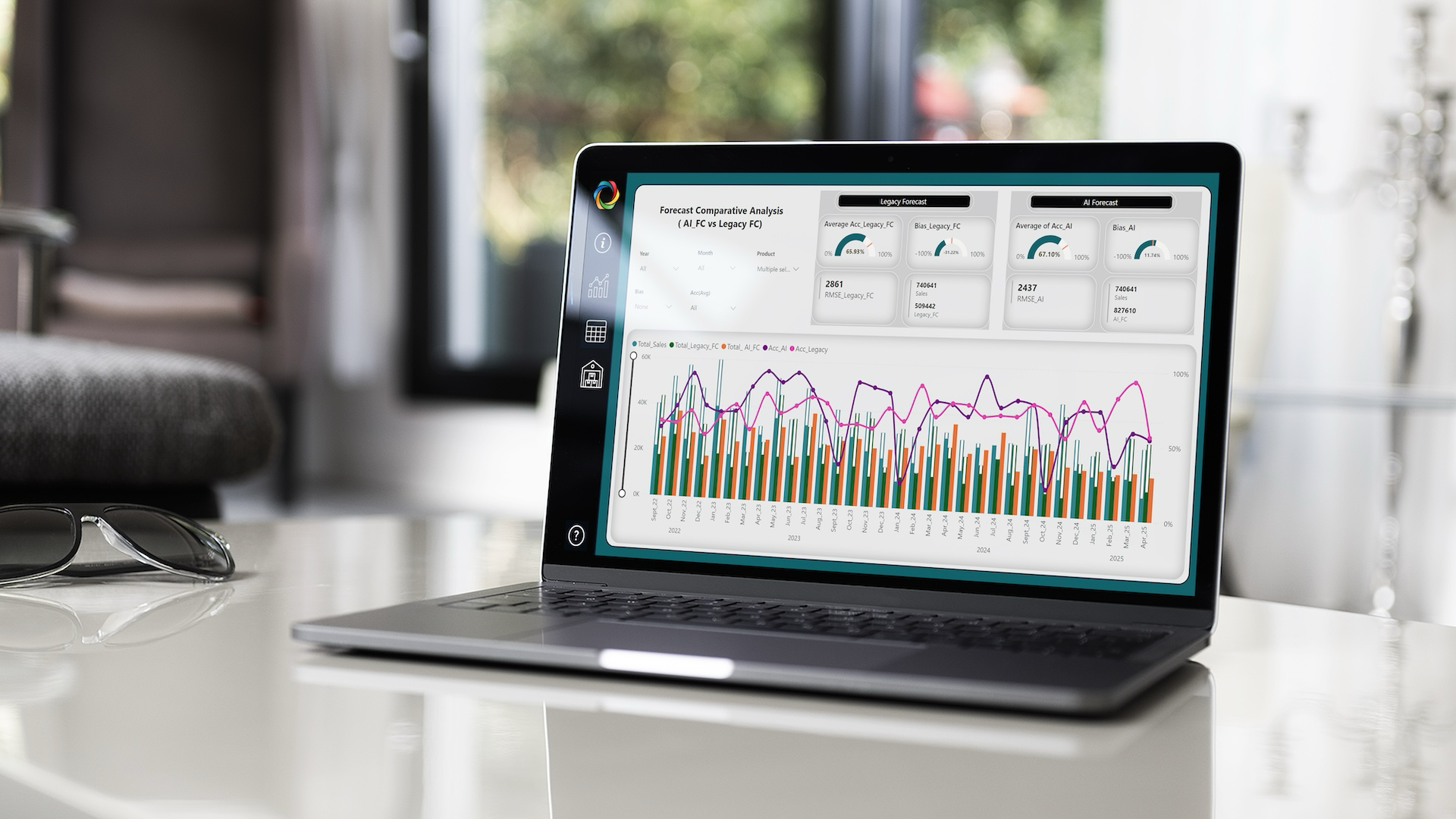
AI enhances the human touch: Sales forecasting, inventory management, and sales assistance all play a role here. Forecasting future demand, sales, or inventory levels is vital to business survival. It ensures that sufficient products are available—without excess inventory. Digital support for in-store sales associates is designed to improve advice and the customer experience. Tools display product information, inventory levels, cross-selling suggestions, and customer data on tablets or smartphones. The result can be an AI-powered recommendation for a customer’s “next best outfit.”
In summary, omnichannel in 2026 means: moving complexity out of the customer experience and into the backend. Retailers who rely on an integrated stack create seamless customer journeys and ensure profitability.
If you’d like to implement exactly that in your store, please contact us.
We’d be happy to help!